How much exercise does a dog need?
Dogs need more than just exercise.
When people ask, “How much exercise does a dog need a day?”, they’re often expecting a number: 30 minutes, an hour, 2 hours..
But dogs don’t experience the world the way we do.
Humans tend to view walks as dog exercise. Dogs view them as an opportunity to gather information, socialise, explore and engage with their environment. In fact, when we look at a dog’s ethogram – the natural behaviours that make up a healthy canine life – exercise accounts for only a small part of the day.
What does a dog’s day actually look like?
Research into canine behaviour suggests dogs naturally spend around:
- 60% of their time resting and sleeping
- 20% observing
- 12% sniffing and investigating
- 8% exercising
This doesn’t mean exercise isn’t important. It absolutely is. But it does suggest that many of us may overestimate how much of a dog’s day should be spent in constant physical activity.
It’s also worth remembering that there is no one-size-fits-all answer. A young Labrador, an adult Greyhound and a senior Dachshund will all have different exercise needs. Age, breed, health, personality and life stage all play a role in determining what a balanced day looks like.
Exercise by life stage
How much exercise does a puppy need?
More puppy exercise isn’t better. Growing bodies need plenty of time to rest and recover, with opportunities for short bursts of movement, socialisation, exploration and sleep. In fact, puppies need 14-20 hours of sleep a day as they develop.
A puppy’s daily ethogram – their natural pattern of behaviours – typically shows around 20-25% movement of some kind, and 75-80% inactive behaviour like rest and sleep.
How much exercise do adult dogs need?
Adult dogs typically enjoy more physical activity, but even then, movement should be balanced with opportunities to sniff, observe, play and simply be a dog. Senior dogs may move more slowly, but still benefit from regular activity that keeps them comfortable, engaged and connected to their environment.
It’s about balance, not exhaustion
A good dog day isn’t about being on the move all the time. It’s about having opportunities to rest, observe, explore, socialise and move in ways that feel natural and fulfilling.
A Good Dog Day is about the whole dog experience, not just maximising exercise – it’s about creating the right balance of movement, exploration, social interaction and rest.
Prioritising movement at WagWorks
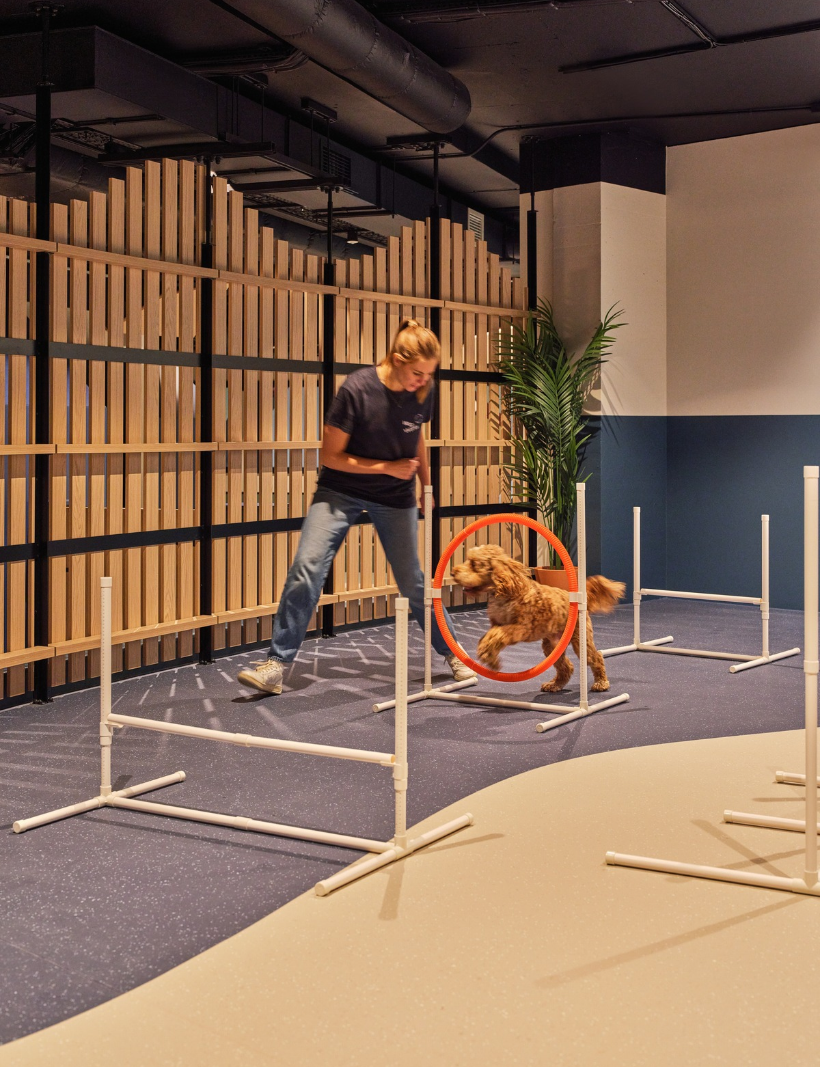
During dog daycare, our dogs have a mix of activities like mooching, play and walks — not just one. This gives them a balanced and appropriate level of exercise and stimulation, rather than repetitive high-intensity activity.
Top tips for your dog’s exercise
- Slow, relaxed walking: letting your dog move at their own pace is really beneficial – giving them the chance to explore naturally without putting too much pressure on their bodies
- Variety of movement: give them a mix of ways to move, not just walking, but opportunities to mooch, sniff and play too
- Change up the environment: new sights, sounds and smells give your dog fresh things to investigate and think about, not just somewhere new to walk
- Match activity to life stage: a puppy, adult and senior dog all move differently – tailor the pace, duration and type of activity to what’s right for your dog’s age and energy levels
A good dog day is about balance, not burnout. Browse our articles for more expert advice on giving your dog everything they need to thrive.