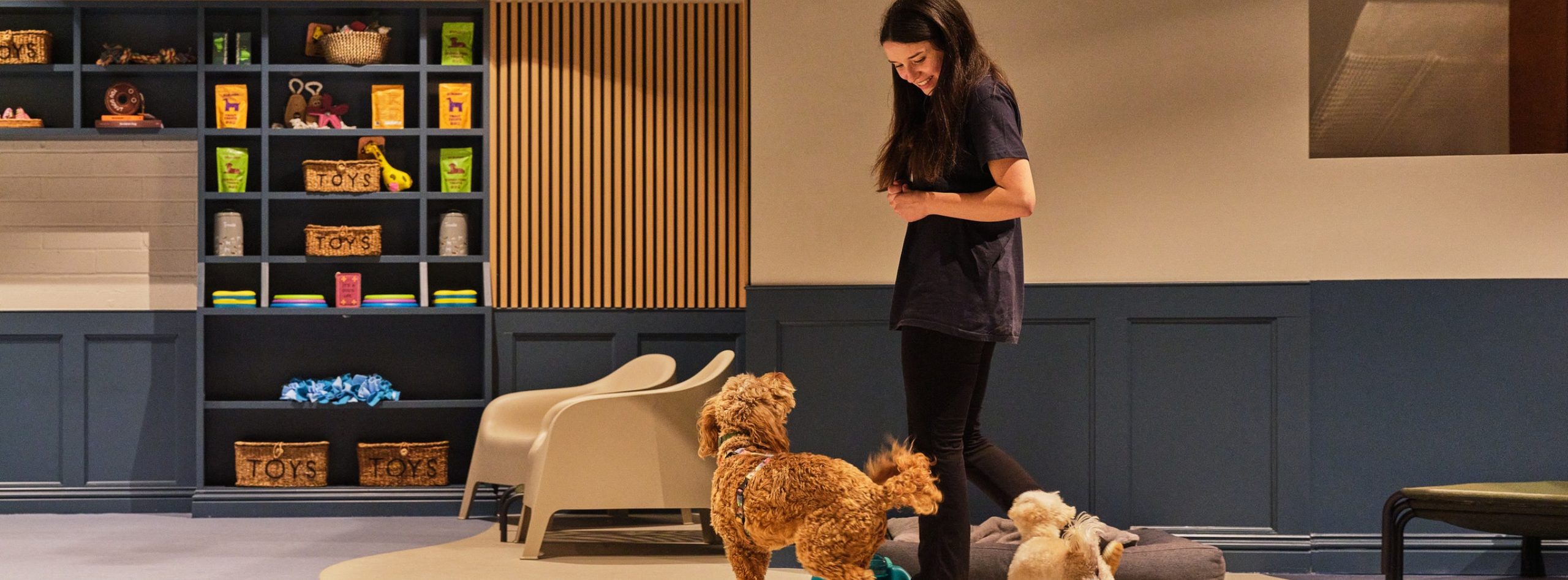
Puppy Training: A Complete Guide
Bringing home a new puppy is exciting, but knowing where to start with training can feel overwhelming. When should you begin? What should you teach first? And how do you prepare a puppy for life in a busy city?
This guide covers everything you need to get started. That includes when to start training, the best way to train a puppy, the basic skills that matter most for city life, and practical puppy training tips for common early challenges like toilet training.
What Does Your Puppy Need to Know to Grow Up in the City?
Puppies have a lot to learn. From their first walk around the neighbourhood to meeting new people and dogs, every experience helps shape how they understand the world around them.
That’s why puppy training isn’t just about teaching commands. It’s about helping your puppy grow into a happy, healthy and confident dog. One that feels comfortable exploring new environments, learning new skills and navigating everyday life alongside you.
For city dogs, that might mean learning to come back when called in the park, wait patiently at a busy crossing, walk calmly through crowded streets or approach new experiences with confidence. These aren’t just training exercises. They’re life skills that can help your puppy thrive.
When can you start puppy training?
Training can start the moment you bring your puppy home. How quickly they take to it depends on their breed and personality, and even puppies from the same litter are different.
In the early days, the best training isn’t about formal commands and obedience. It’s about building a relationship where your puppy feels safe, understood and has their needs met. You don’t need to do everything at once. Start with the basics:
- Enough food and sleep. These come first. Puppies can’t learn when they’re overtired, so don’t disturb them while they’re sleeping.
- Gentle handling. Gently touch your puppy so they get used to it. Popping them on a bath mat on a table gets them comfortable being lifted up for grooming and vet visits, which is especially useful for hairy breeds.
- A harness at home. Getting used to wearing one now makes walks easier later.
- Time with you. Help them enjoy being around you.
House training comes next. You can also start getting your puppy used to the world before their vaccinations are complete. Carry them outside so they can see and hear traffic from the safety of your arms, or take them on short car journeys.
Less is more with puppies. Training shouldn’t be goal-oriented or competitive, and puppies need lots of nurturing but also quiet time between new experiences to process what they’ve learned. The aim is to help them feel safe, curious and confident from day one.
Getting started: first steps for new puppy owners
Alongside helping your puppy feel safe, there are a few things to sort in the first few weeks:
- Get the basics right. You’ll need a well-fitted harness, a lightweight lead and an identity disc.
- Feed well. Choose a food labelled “complete and balanced” and follow the feeding guide for your puppy’s age and weight, reviewing portions as they grow. Too little can make them restless, and too much can affect their joints. You should be able to feel their ribs, but not see them.
- Register with a vet. Your vet will guide you through your puppy’s primary vaccinations, which typically protect against distemper, hepatitis, parvovirus and leptospirosis. Kennel cough isn’t part of these core vaccinations, but it’s recommended for puppies who’ll spend a lot of time with groups of dogs, like at daycare, kennels or puppy classes. Ask your vet when it’s safe for your puppy to explore outside and mix with other dogs. Regular gentle handling at home helps build vet-ready confidence too.
Progress isn’t always linear, so celebrate the small wins along the way.
The best way to train a puppy: positive reinforcement
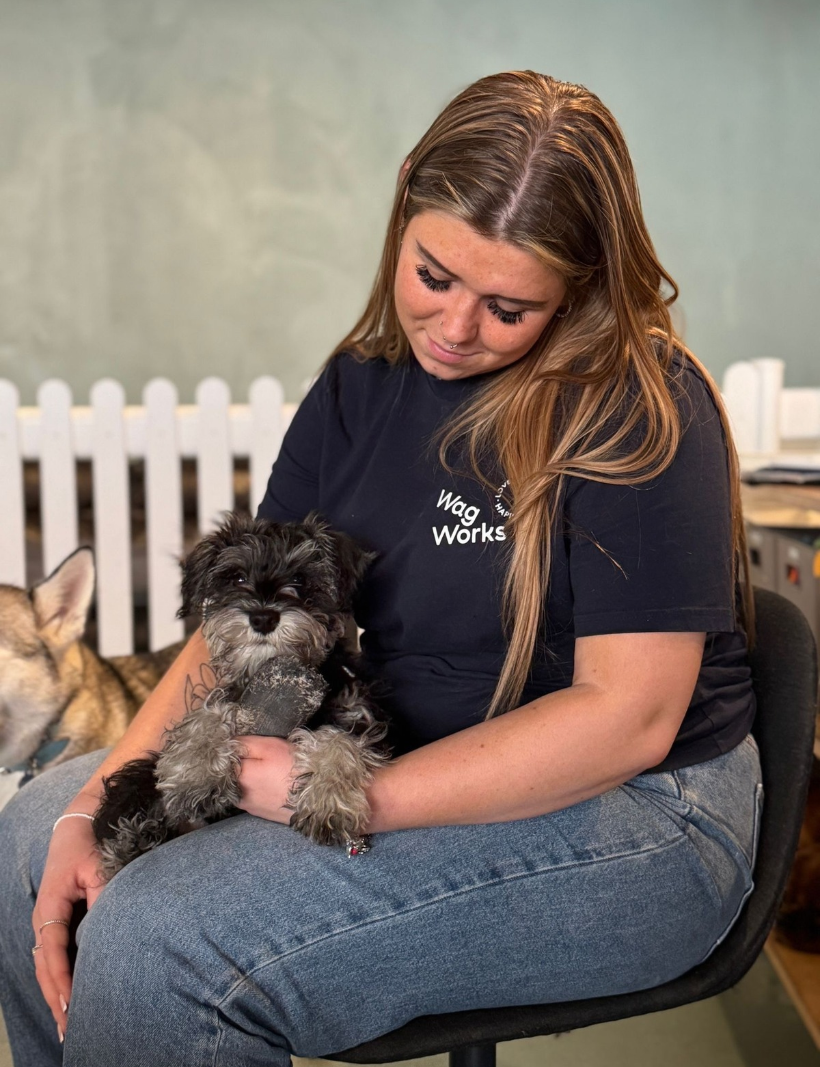
Positive reinforcement means rewarding the behaviour you want to see, so your puppy learns that good choices lead to good things. Rather than correcting mistakes, you focus on catching your puppy getting it right.
It’s the approach we use at WagWorks because it builds trust as well as skills. Puppies who feel safe learning are more confident, more willing to try new things and more likely to repeat what’s been rewarded.
In practice, that looks like:
- Rewarding straight away. Whether it’s going to the toilet outside or waiting at the door, reward the moment it happens so your puppy makes the connection.
- Using what your puppy loves. Treats, praise and toys all work. Find what motivates your puppy most.
- Pairing new or scary experiences with positives. If your puppy hears or sees something unfamiliar, use treats, praise or toys to help them learn it’s nothing to worry about.
- Not punishing mistakes. Accidents happen and are part of learning. Punishment can make puppies anxious and less likely to engage, so stay calm, move on and reward the next success.
Basic puppy training for city life
Recall
A reliable recall is one of the most valuable skills you can teach your puppy. Whether you’re in a secure park, an enclosed space or simply want your dog to check back in with you, recall gives them freedom while keeping them safe.
Building a strong recall takes time and consistency. Start in quiet, low-distraction spaces, then gradually build up to busier ones.
Top tip: Make coming back to you feel amazing. Say your puppy’s name, and when they come to you, reward them straight away rather than asking them to sit first. Waving your hand and taking a few steps backwards encourages them to come to you. Vary your treats and save the best ones for recall, so they always have a reason to come back.
Waiting and patience
City life is full of moments where waiting matters. Waiting on the pavement before crossing the road. Waiting at a doorway. Waiting while another dog passes. Waiting calmly while you stop to chat with a friend.
Teaching your puppy to pause and look to you for guidance makes busy environments much easier and safer to navigate. These small moments of self-control often become some of the most useful skills your dog will ever learn.
Top tip: Use a flat hand, held low, as your signal to wait. You’re not asking for a sit, just for your puppy to be still for a moment. Reward with several treats that are good but not too exciting, so they stay calm. Practise in everyday moments, like at the kerb, while you pick up poo, when you clip the lead on and off, or in a coffee queue.
Loose lead walking
Loose lead walking teaches your puppy to move through the world alongside you.
Busy pavements are full of distractions, from food on the floor and passing cyclists to exciting smells and unfamiliar dogs. Rewarding your puppy for staying close helps them learn that staying connected to you is rewarding, even when there’s lots going on around them.
Top tip: Go at your puppy’s pace, not yours. You’re not trying to walk them to heel, and a walk should be a nice experience, not exercise. Start by stepping out of the front door so they can see the world, then coming back in. Build up to short bits of walking without a destination in mind, like up to the first lamppost, and slowly extend the distance. When your puppy walks nicely, say “good, well done” and put a treat on the ground. That’s a reward, not luring them along. If they pull, don’t pull back. Stop, stand still and think about why. If they’re overstimulated, turn around and head home.
Positive socialisation
Not every puppy is naturally confident, which is why positive socialisation matters so much.
Introducing your puppy to new people, sounds, surfaces and places in a positive and controlled way helps them build confidence as they grow. For city dogs, that might include traffic noise, crowded streets, lifts, cafés and busy parks.
The goal isn’t to expose them to everything at once. It’s to show them that new experiences are nothing to worry about and can be approached calmly and confidently.
Common puppy training challenges
Every puppy hits a few bumps along the way. Here are some of the most common challenges when puppy training, and how to handle them.
Toilet training
Young puppies can’t hold their bladder for long, and most won’t have much control until they’re around 10–11 weeks old, so accidents are completely normal.
Take your puppy outside after they wake up, after meals, after play, and every 30–60 minutes in the early days. When they go in the right place, reward them straight away so they make the connection. If accidents happen, clean up calmly and reward the next success.
If you’re using a puppy pad, place it by the door you use to go outside, and keep it well away from where your puppy eats.
Chewing and teething
Chewing is a natural and important behaviour for puppies, and is most prominent between 14 weeks and six months, when they’re teething. Chewing 1-2 hours a day releases ‘feel good’ endorphins and helps regulate their nervous system.
Rather than trying to stop it, give your puppy plenty of appropriate things to chew, like lick mats, stuffed KONGs and safe, long-lasting chews. Offering a few different options lets them choose what they enjoy. Frozen treats can help soothe sore gums too.
Nipping and mouthing
Puppies explore the world with their mouths, so nipping hands and sleeves is very common. When it happens, calmly redirect your puppy to a toy or chew, and reward them for choosing that instead.
Fear and nervousness
Fear is a natural, protective emotion, but if it’s misunderstood or ignored, it can lead to other behaviour problems later on. Some signs are obvious, like hiding, trembling or a tightly tucked tail. Others are easier to miss: lip licking when there’s no food around, yawning, freezing or slowing down, lifting a paw or turning away. Not all dogs show fear in the same way, so it’s important to learn your puppy’s body language so you can support them.
If your puppy seems worried, give them space and let them choose whether to engage or just watch from a distance. If they’re frightened, help them move away from the situation rather than forcing them into it. Pair new or scary things with treats, praise or play, and keep exposure short and low-pressure. Stay calm and steady: don’t punish fear, but don’t over-fuss either.
Overtiredness
Puppies need a lot of sleep, typically 14–20 hours a day. Sleep is when they process what they’ve learned, so a puppy who isn’t getting enough is more likely to be restless and harder to settle.
Make sure your puppy has a comfortable, quiet space where they can rest undisturbed. Remember that a calm, balanced day matters more than a busy one.
Remember, you don’t have to do it alone
One of the biggest misconceptions about puppy training is that owners need to figure everything out for themselves.
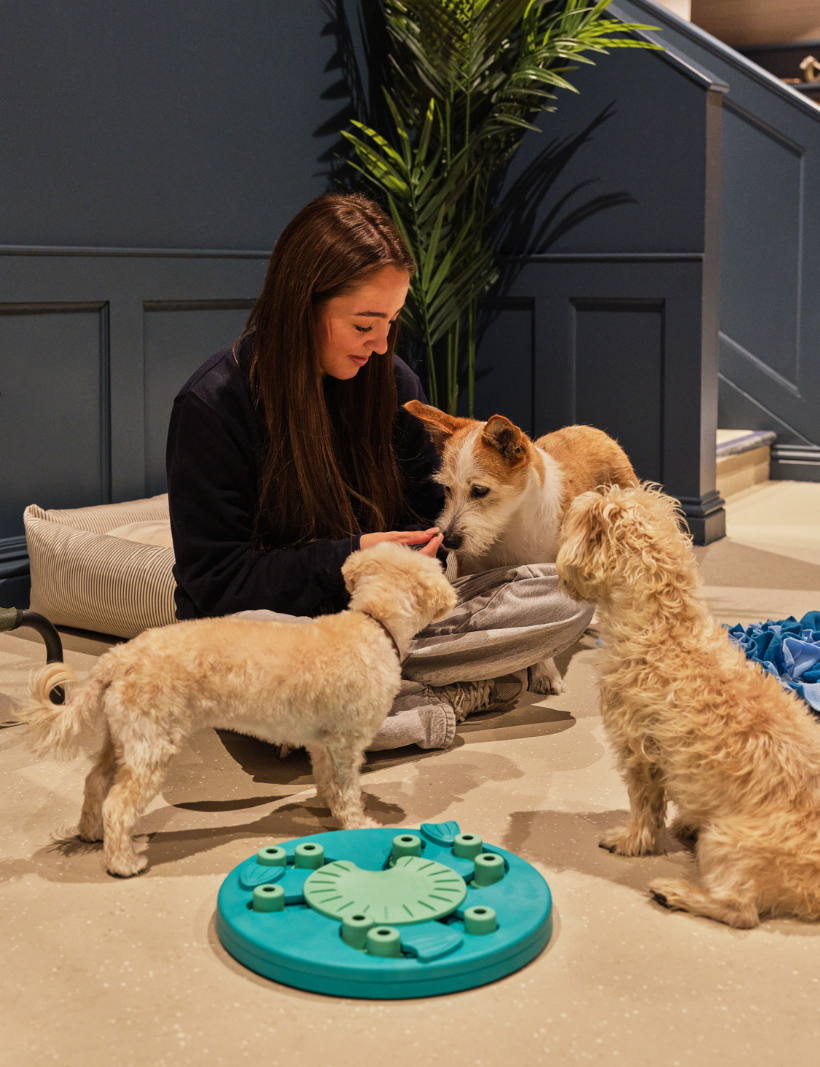
In reality, getting professional support early can make a huge difference. An experienced trainer can help you understand your puppy’s behaviour, work out which skills matter most for you both, and guide you through challenges before they become habits.
Just as importantly, they can build your confidence too. Successful puppy training isn’t only about teaching your dog. It’s about giving owners the knowledge and support they need to help their puppy thrive.
Learning together at WagWorks
Our Puppy Class is designed specifically with city life in mind.
Delivered in small groups, it gives puppies the chance to learn, socialise and build confidence in a supportive environment, while owners get personalised guidance from our experienced team.
Across four weeks, we cover the foundations that help puppies succeed in the city:
- Puppy wellbeing, sleep, nutrition and enrichment
- Understanding body language and common puppy behaviours
- Recall and loose lead walking
- Positive socialisation and confidence building
- Wait and stay
- Everyday life skills and door manners
- Building a strong relationship between puppy and owner
“Our Puppy Class is about giving owners the confidence to support their puppy beyond the classroom. The small group setting means we can give each puppy and owner individual support, while making learning a fun and positive experience.”
– Ellie, Assistant Club Manager, WagWorks Fulham
Growing together
When thinking about puppy training, don’t just ask, “What commands should my puppy know?”
Ask, “What does my puppy need to know to enjoy the life we’re going to live together?”
That’s the foundation for a happier, safer and more fulfilling life. Every puppy learns at their own pace, but the right support makes the journey much easier.